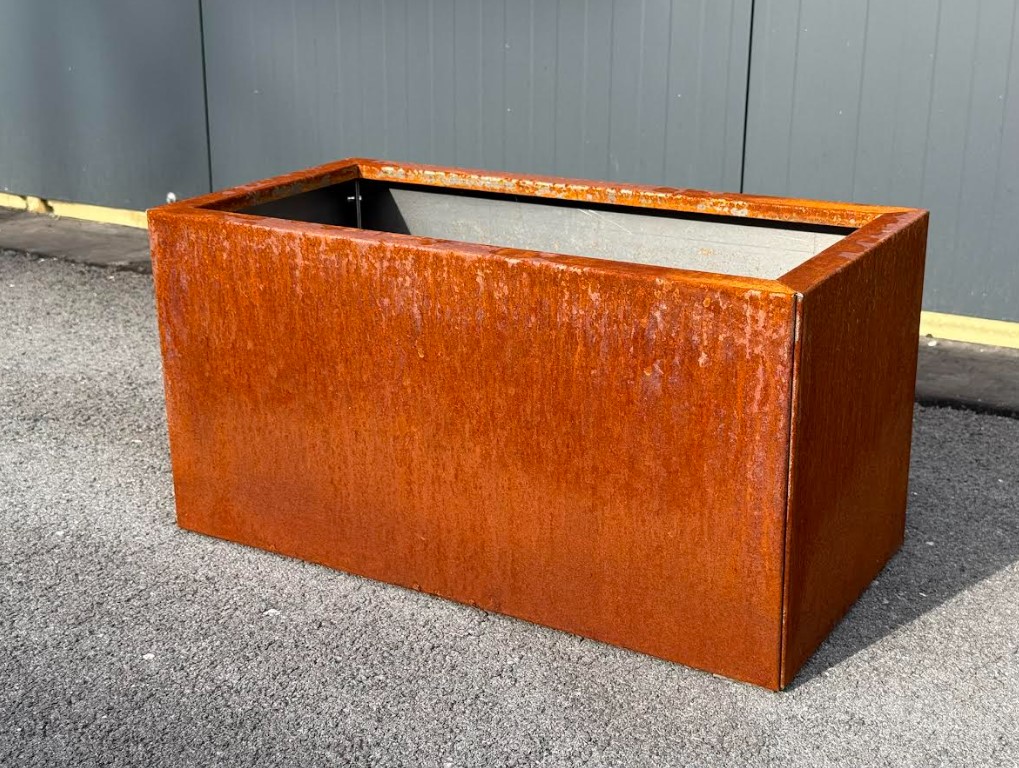
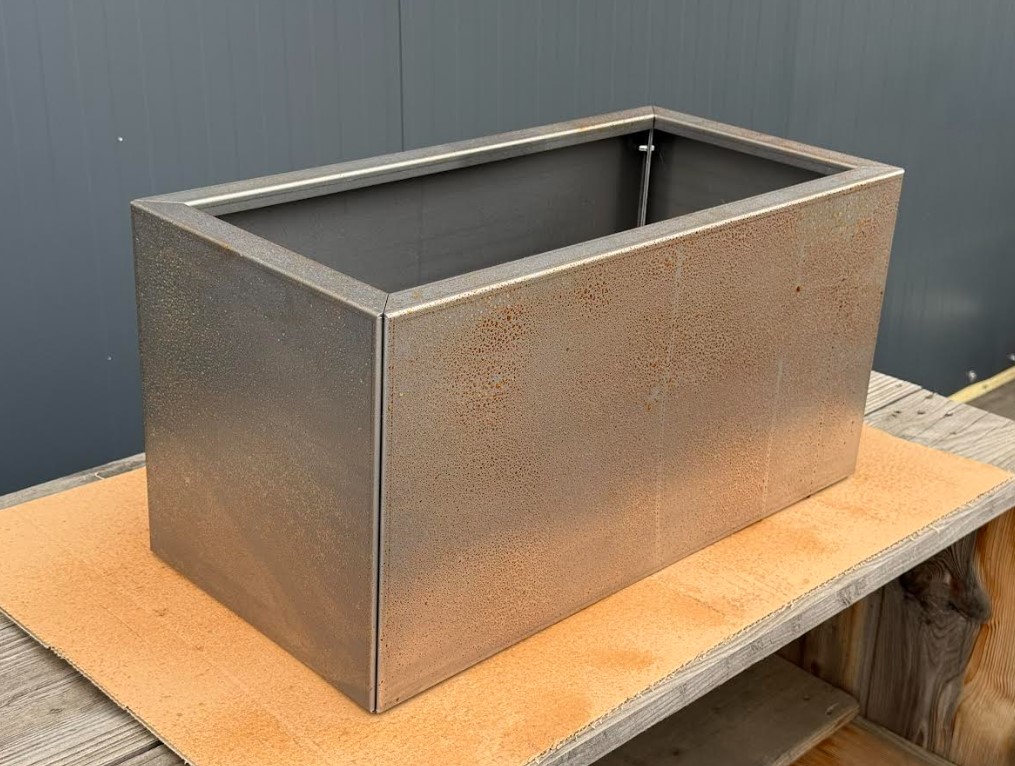
Corten steel is one of the most popular materials for modern outdoor Corten flower planters. It is used due to its exceptional durability and aesthetic value. A key feature of Corten steel is its ability to naturally develop a beautiful rust-brown-orange protective patina. This thin oxide layer not only protects the metal from further corrosion but also gives the planter a unique, industrial yet natural appearance that blends perfectly with modern gardens, terraces, and façades.
The natural patina formation process is relatively slow and usually takes several weeks or even months, depending on weather conditions, humidity, and ambient temperature. During this time, a uniform protective layer gradually forms on the surface, becoming increasingly resistant over the years. However, many Corten planter owners want faster results, especially immediately after purchasing a new product. With a simple and proven method we recommend, visible results can be achieved the same day, while the final even and attractive appearance develops within one to three days.
Solution Ingredients
To prepare approximately half a liter of solution, enough for one medium-sized planter, you will need the following ingredients: half a liter of 3% hydrogen peroxide, 60 milliliters of alcohol vinegar or white vinegar, half a tablespoon of regular table salt, and an empty spray bottle with a fine mist nozzle. All ingredients are inexpensive and widely available in pharmacies, grocery stores, or specialized shops.
Procedure
The process begins with thorough surface preparation. Clean the entire Corten planter with mild soap and water, removing any dirt, dust, grease, or remnants of protective film that are commonly present on new products. The surface must be completely clean and dry, as moisture or dirt can affect the uniformity of the patina. Pour half a liter of hydrogen peroxide into the spray bottle, add 60 milliliters of vinegar, and then add half a tablespoon of salt. Shake the bottle well until the salt is completely dissolved.
Spray the solution evenly over all exterior and interior surfaces of the planter in thin, uniform layers. It is important not to apply too thick a layer, as this may cause uneven spots. After 20 to 30 minutes, repeat the process. Perform a total of two to four applications depending on the desired color intensity. Between applications, leave the planter outdoors. The first effects usually appear within 10 to 30 minutes, and visible patina develops on the same day. The final deep and even rust-brown-orange appearance is achieved within one to three days.