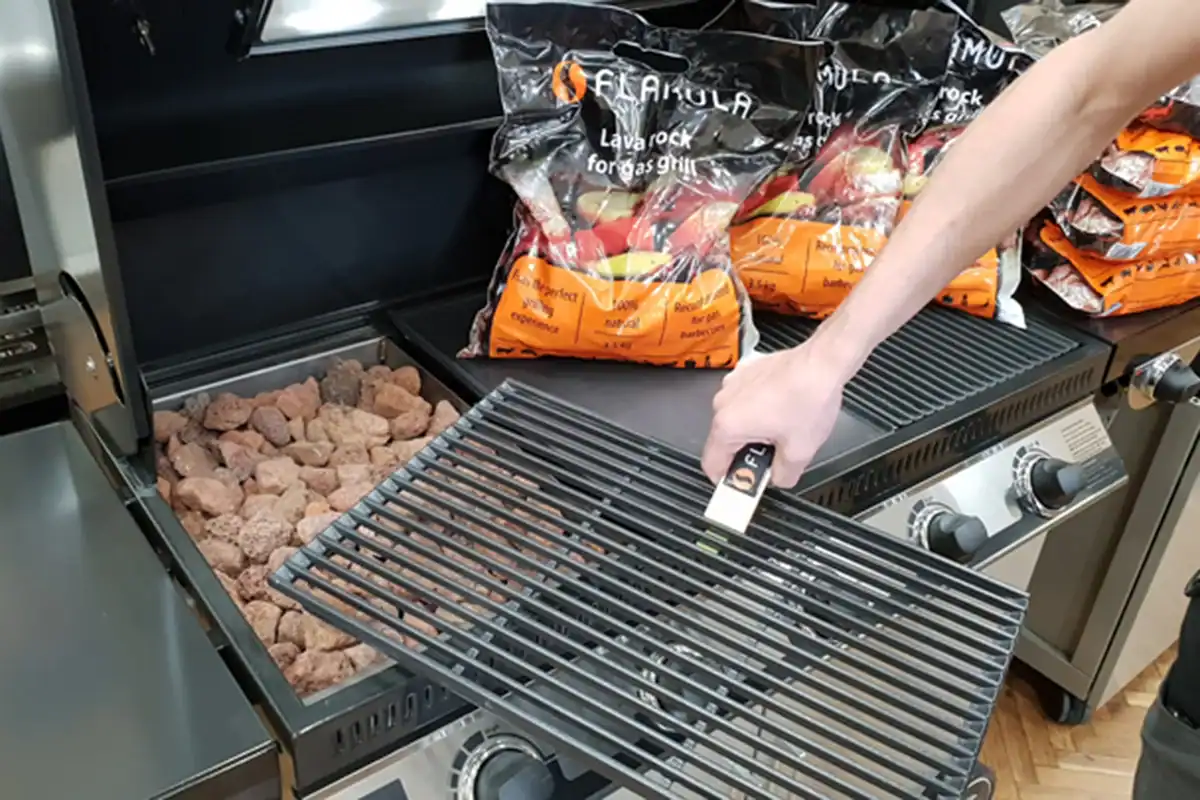
When summer comes to an end and the days get shorter, many people put their gas grill away until the following year. Before doing so, however, it is worth taking some time to inspect its individual components. Lava rocks are among the parts that deserve attention. During grilling, they absorb heat from the burners, retain it and distribute it evenly towards the upper cooking grate. Over time, their porous structure collects grease and juices from food. After several months of regular use, their condition can change considerably.
The end of the grilling season is a good opportunity to check whether the rocks are still suitable for further use. If they are damaged, heavily saturated with grease or beginning to crumble, it is better to replace them before your next barbecue session. This helps prevent unpleasant surprises when you first switch on the grill and ensures that your equipment is ready for many more outdoor cooking experiences.
Signs That Your Lava Rocks Are Worn Out
Lava rocks are designed for repeated use, so there is no need to replace them after every summer. With proper maintenance, they can last for several seasons. Their lifespan is not unlimited, though. When inspecting them, pay attention to a few visible changes. Cracks and crumbling are among the first signs of wear. If the rocks break apart, fall into smaller pieces or lose their original shape, replacement is recommended. Damaged pieces no longer perform in the same way and can also make it difficult to arrange them properly across the lower grate.
Another reason to replace the rocks is heavy grease saturation. When preparing meat, fish and other foods, grease and natural juices drip onto the stones. Some of these residues penetrate their pores. After many grilling sessions, a dark, sticky layer may develop on the surface. If the rocks produce excessive smoke or an unpleasant smell when heated, ordinary cleaning is probably no longer enough. You should also pay attention to how evenly your food cooks. If certain areas of the grill heat up differently, causing food to brown quickly on one side while remaining undercooked on the other, check the condition and arrangement of the rocks. Clogged pores and unevenly distributed pieces can affect heat transfer.
Why You Should Not Leave Dirty Lava Rocks Until Spring
After the last summer barbecue, it is easy to simply close the grill and forget about it until the warmer weather returns. This is not the best approach, especially if the lava rocks are still covered with food and grease residues.
While the grill is not being used, it remains exposed to different weather conditions. Moisture, temperature fluctuations and unsuitable storage can affect the condition of individual rocks. Water trapped in their porous structure is undesirable, as it may damage the material under certain conditions. Grease residues accumulated during the grilling season will also be exposed to high temperatures again when the grill is next switched on. This can lead to more smoke, unpleasant smells or sudden flare-ups caused by burning grease deposits. For this reason, it is better to clean and inspect the rocks as soon as the season ends. If you discover that they are worn out, remove them and prepare the grill for storage. You can install new rocks shortly before using the grill again.
How to Prepare the Grill and Replace Lava Rocks Correctly
Replacing the rocks is not difficult, but it is important to follow the correct sequence. Before starting, make sure that the grill is completely switched off and has cooled down. Turn off the gas supply and wait until all components have reached a safe temperature. First, remove the old lava rocks. Check the condition of the lower grate on which they were placed as well. Remove grease, ash and any other dirt. Inspect the burners and make sure they are not blocked or damaged. If necessary, clean them according to the grill manufacturer’s instructions. Suitable BBQ tools and accessories can also help with this task.
Next, check whether your particular gas grill model is actually designed for use with lava rocks. Some newer models have metal heat shields or other heat distribution systems instead. Do not add lava rocks to these appliances without checking the manufacturer’s instructions, as an unsuitable installation may affect the grill’s operation and safety. If your grill is designed for lava rocks, distribute the new pieces evenly across the designated lower grate. Do not stack them in several layers, as heat needs to reach every part of the surface. Leave enough space between individual rocks to allow proper airflow and ensure that the burners function correctly.
How to Store Lava Rocks During Winter
If you do not plan to use your grill during the colder months, it is best to remove the lava rocks and store them in a dry place. Make sure they are completely dry before putting them away. You can use a suitable container or bag and keep it in a dry area protected from the weather. If the grill remains outdoors and you cover it with a protective cover, make sure its internal components are also properly protected. A cover alone does not guarantee that moisture will stay out of the grill. Before using the appliance again, inspect the grates, burners and other components.
Things are different for those who enjoy grilling during winter as well. Low temperatures alone are not a reason to give up cooking outdoors. If your gas grill is suitable for use in colder conditions, you can install new lava rocks before your winter barbecue session. Before placing any food on the grill, allow it to heat up for approximately 10 to 15 minutes without food. This gives the rocks enough time to warm up and get ready for use. If you are also interested in grilling during the colder months, you can read our article about using electric grills in winter.
How Often Should You Replace Lava Rocks?
There is no fixed replacement schedule that applies to every gas grill. Someone who uses their grill almost every weekend will probably need to replace the rocks sooner than someone who only switches on their appliance a few times a year. The type of food being prepared, the amount of grease released and regular maintenance habits also affect how quickly the rocks wear out. Instead of relying only on the number of months they have been in use, check their actual condition regularly. If they are still intact, have no major damage and are not saturated with grease, you can continue using them during the next grilling season. Once they begin to crumble, produce excessive smoke or cause problems during cooking, it is time to replace them.
After each use, remove any food residues and ash. At the end of the season, carry out a more thorough inspection. This will make it easier to decide whether the entire quantity needs replacing or whether the existing rocks can remain in use for a little longer.
Get Your Gas Grill Ready for the New Season with Fresh Lava Rocks
A well-maintained grill will last longer, while regular checks of its individual components help preserve good cooking results. Lava rocks play an important role because they distribute and retain heat. When you notice signs of wear, do not put off replacing them. Your next barbecue session will be more enjoyable, and food preparation will be more reliable. If you would also like to learn more about their properties and benefits when cooking, read our article Why Choose Lava Rocks for Grilling.
To refresh your gas grill, choose Flamula lava rocks. They are available in 3.5 kg packs and are made from natural volcanic rock designed for use in gas grills. Whether you want to replace worn rocks at the end of the season or prepare for winter grilling, take a look at the offer and make sure you have a fresh supply ready in time. Flamula lava rocks are a simple way to prepare your grill for many delicious meals throughout the year.