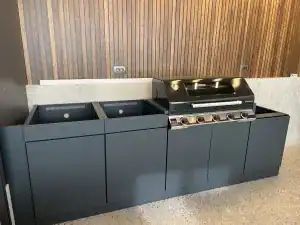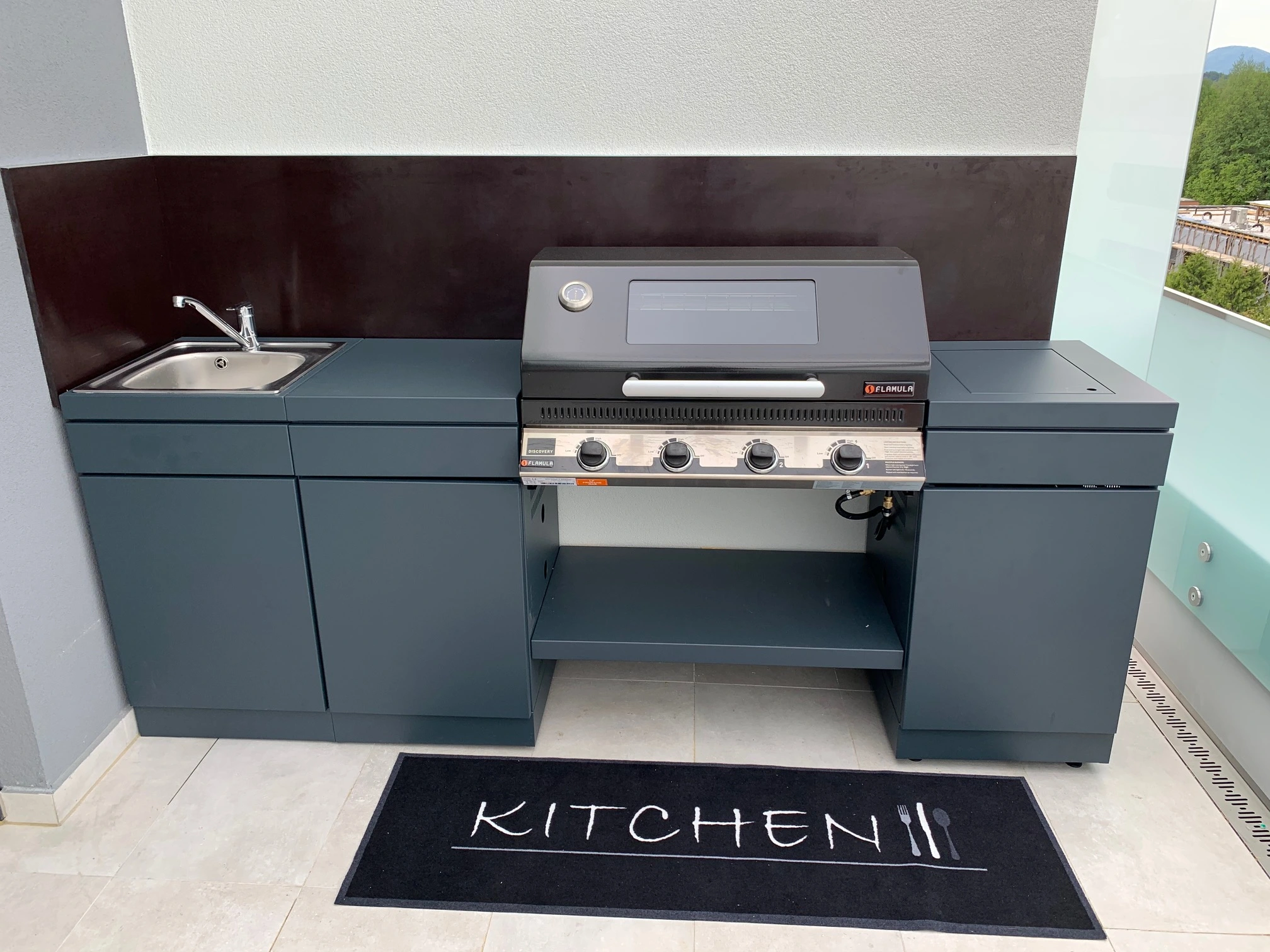
When choosing materials for an outdoor kitchen, it is not enough to simply pick the one you like the look of most. The kitchen units will be exposed to sunlight, rain, moisture, wind and changes in temperature. You will use them to prepare food, put down hot cookware, clean work surfaces and store kitchen utensils. That is why an outdoor kitchen needs to be made from materials that can withstand this kind of use without requiring too much maintenance.
There are quite a few options available, ranging from wood and stone to metal structures and modern composite surfaces. When choosing a Flamula outdoor kitchen, you can select from three metal finishes: galvanised sheet steel, stainless steel and aluminium. Each has its own characteristics, so it is worth considering which one best suits your space, how you intend to use the kitchen and your expectations regarding its appearance. Before making a decision, you can also read more about how to plan an outdoor kitchen that is truly practical.
Materials Must Withstand Different Weather Conditions
An outdoor kitchen spends most of the year outside, which means its components are much more exposed to the weather than indoor furniture. In summer, surfaces can become very hot, rain brings moisture, while low temperatures and frost can put additional strain on the materials in winter. If the kitchen is installed on an uncovered terrace, you should also consider direct sunlight and UV radiation when choosing the materials.
The material needs to be durable enough to avoid damage during normal use. For worktops, resistance to stains, scratches and heat is also desirable, along with easy cleaning. When it comes to the frame and cabinets, you should mainly check their resistance to moisture and corrosion. Before buying, consider whether the kitchen will be placed under a canopy or completely out in the open. Protection from rain and direct sunlight can extend the lifespan of individual components, but even a covered kitchen needs materials designed for outdoor use.
Galvanised Sheet Steel for a Good Balance Between Price and Durability
Galvanised sheet steel is an interesting option for anyone looking for a sturdy metal structure at a more affordable price. During galvanisation, the steel is protected with a layer of zinc, which reduces the risk of corrosion. This treatment is particularly useful for outdoor components exposed to moisture and changing weather conditions. Another major advantage of this material is that it can be painted. The surface can be powder-coated in different RAL colours, allowing you to match the appearance of the kitchen with your house façade, fence, flooring or garden furniture. You are therefore not limited to a metallic look or neutral colours. More distinctive shades can also complement the design of your terrace.
Even with galvanised sheet steel, it is necessary to take care of the protective surface. Deep damage to the coating or moisture remaining on damaged areas for a longer period can increase the risk of corrosion. A soft cloth and mild cleaning product are usually sufficient for cleaning. Rough sponges and aggressive cleaning agents are not suitable, as they can damage the surface coating. This material is a good solution for anyone who wants a functional metal outdoor kitchen with an appearance that can be adapted to their outdoor space.
Stainless Steel for a Modern Look and Easy Maintenance
Stainless steel, also known as inox, has been a well-established material in kitchens for many years. It is used for sinks, cooker hoods, worktops and professional catering equipment. The reason is simple: it is a durable material that, when the right grade is selected, is also suitable for more demanding conditions. Its main advantage is corrosion resistance. Stainless steel contains chromium, which forms a thin protective layer on the surface. This helps prevent rust and makes the material suitable for use in humid environments. Stainless steel is also hygienic, does not absorb liquids and is easy to clean. A soft cloth and a suitable cleaning product are generally enough for everyday care.
It has an elegant appearance and works well with modern architecture. It pairs particularly well with a Flamula electric grill, dark worktops or wooden elements. However, keep in mind that fingerprints, water marks and small scratches can be visible on smooth stainless steel. Rough wire sponges and cleaning products containing abrasive particles should therefore be avoided. If the kitchen is installed directly by the sea or in an environment where salt is present, it is advisable to choose an appropriate grade of stainless steel and clean the surfaces regularly. Salt and certain aggressive substances can damage the protective layer of this material as well.
Aluminium for a Lighter Structure and Resistance to Moisture
Aluminium is popular for outdoor furniture and equipment because it combines low weight, strength and good corrosion resistance. An oxide layer forms naturally on its surface, protecting the metal from further environmental effects. Unlike ordinary steel, aluminium does not rust in the same way, making it suitable for outdoor use. Since it is lighter than many other metals, an aluminium kitchen can be an interesting solution for balconies, terraces and wooden platforms where the load-bearing capacity of the structure needs to be considered. Lighter components are also more convenient if you want to move the kitchen occasionally or change its layout.
Aluminium allows for different design options. It can retain its metallic appearance or be surface-treated and coloured to match its surroundings. Powder-coated components offer a wide choice of shades, while the quality of surface preparation and coating application also matters. Aluminium does not require much maintenance. Occasional cleaning with water and a mild detergent is usually enough. When choosing a kitchen, however, check the quality of the construction, the thickness of the material and the way the joints are made, as these factors also affect the stability and lifespan of the kitchen.
What About Wooden, Stone and Brick Outdoor Kitchens?
Metal designs are not the only option. Some people choose wood because it brings a natural and warm appearance to the garden. A wooden kitchen can blend in beautifully with greenery and wooden terraces. However, it requires more care. Direct exposure to rain and sunlight can cause changes in colour, cracks and other damage. Protective coatings and regular surface treatment are therefore part of its maintenance.
Stone and brick structures are suitable for anyone looking for a solid and permanent solution. Such a kitchen can become a lasting feature of the garden, but it is more difficult to move or adapt later on. A properly prepared base is also necessary, as the structure is considerably heavier than a metal one. With these designs, you also need to choose the material for the worktop separately. Granite, ceramic and engineered surfaces such as Dekton are interesting options because of their resistance to stains, scratches and temperature changes. HPL panels offer a wide range of colours and patterns and are easy to clean, but the manufacturer’s instructions regarding exposure to heat must be followed. Every material has its own advantages, so your choice also depends on what you plan to do on the worktop.
The Worktop and Sink Require Special Attention
The kitchen frame and work surfaces do not have the same functions. The metal structure provides stability and load-bearing capacity, while the worktop comes into direct contact with food, liquids, cookware and kitchen utensils every day. For this reason, they do not necessarily have to be made from the same material. When choosing a worktop, check whether its surface is non-porous and easy to clean. It should not absorb liquids easily or allow stubborn stains to remain. If you often put down hot cookware, you should also check its resistance to high temperatures. When using a grill, it is advisable to follow the manufacturer’s safety instructions and avoid placing hot cookware on surfaces that are not designed for this purpose.
The sink is often made from stainless steel. This is a practical solution because of its hygienic properties and ease of cleaning. When choosing the size, consider whether you will use it only for rinsing vegetables and washing your hands or also for cleaning larger dishes and cookware. When equipping your outdoor cooking area, you can also explore the Flamula barbecue accessories, which complement the kitchen area and make food preparation easier.
How to Choose the Right Material for Your Outdoor Kitchen
Before making your final decision, ask yourself a few simple questions. How long will the kitchen be exposed to rain and sunlight? Will you use it every day or only at weekends? Do you want to be able to move individual components? How much time are you willing to spend on cleaning and maintenance? If an affordable metal design with the option of choosing a custom colour is your main priority, galvanised sheet steel is worth considering. Stainless steel is an interesting choice if you want a modern appearance, good hygiene and easy cleaning. If you prefer a lighter structure with good resistance to outdoor conditions, aluminium is a sensible option.
Remember that the lifespan of the kitchen does not depend solely on the basic material. The quality of workmanship, surface protection, installation method and regular care are also important. Even the most durable structure will retain its appearance for longer if you clean it with suitable products and prepare it for winter conditions at the end of the season.
Flamula Outdoor Kitchens in Three Different Materials
When planning an outdoor kitchen, it is a good idea to choose a solution that suits your space and your habits. Flamula outdoor kitchens are available in galvanised sheet steel, stainless steel and aluminium. This allows you to choose the material according to your preferences, intended use and the appearance you want to achieve on your terrace or in your garden.
Explore the Flamula outdoor kitchens and discover the options offered by a modular outdoor kitchen. Individual components can be adapted to the available space and combined to create a kitchen that suits the way you like to cook outdoors. For inspiration when preparing meals, take a look at the Flamula barbecue recipes. With the right choice of materials and a well-planned layout, you can create a space where preparing food is enjoyable and spending time together is even more relaxing.