In autumn, when the leaves on the trees turn warm shades of red, orange, and golden yellow, nature bids farewell to the lushness of summer and invites us to carefully consider renovations. This is the ideal time for autumn planting in flower boxes, which will transform your balcony, terrace, or home entrance into a small oasis of warmth and color. It’s not just about the aesthetic effect—autumn planting prolongs the flowering season in gardens and provides structure even in the colder months.
In Slovenia, where October brings mild days but also hints at the coming winter, flower boxes are an excellent solution for urban gardening. They allow you to experiment with colors and textures, while also being practical for small spaces. If you are looking for durable and aesthetic planters that can withstand Slovenian weather conditions, take a look at our offer.
Why plant in containers in the fall?
Autumn planting in planters is not random – it involves a careful selection of plants that bloom late or retain their beauty throughout the cold months. The main advantage is that we can combine annuals, perennials, and ornamental shrubs that can withstand temperatures down to -10 °C. Chrysanthemums are the most popular autumn flowers for planters, as they bloom from September to November and can withstand light frost. Choose compact varieties that reach a height of 30–50 cm and colour the planter in many shades – from sunny yellow to deep burgundy red. Chrysanthemums thrive in sunny locations, but can also tolerate partial shade, which is suitable for balconies with partial shade.
This type of planting extends the flowering season and makes the space more attractive even in the gray autumn. In addition, urban gardening in planters is environmentally friendly. Compared to a garden, planting in planters is easier for beginners, as it allows for quick renovation without major interventions. At flamula.si, you will find planters that are resistant to frost and UV rays, ensuring that your autumn composition will last longer.
Ideal plants for autumn planting
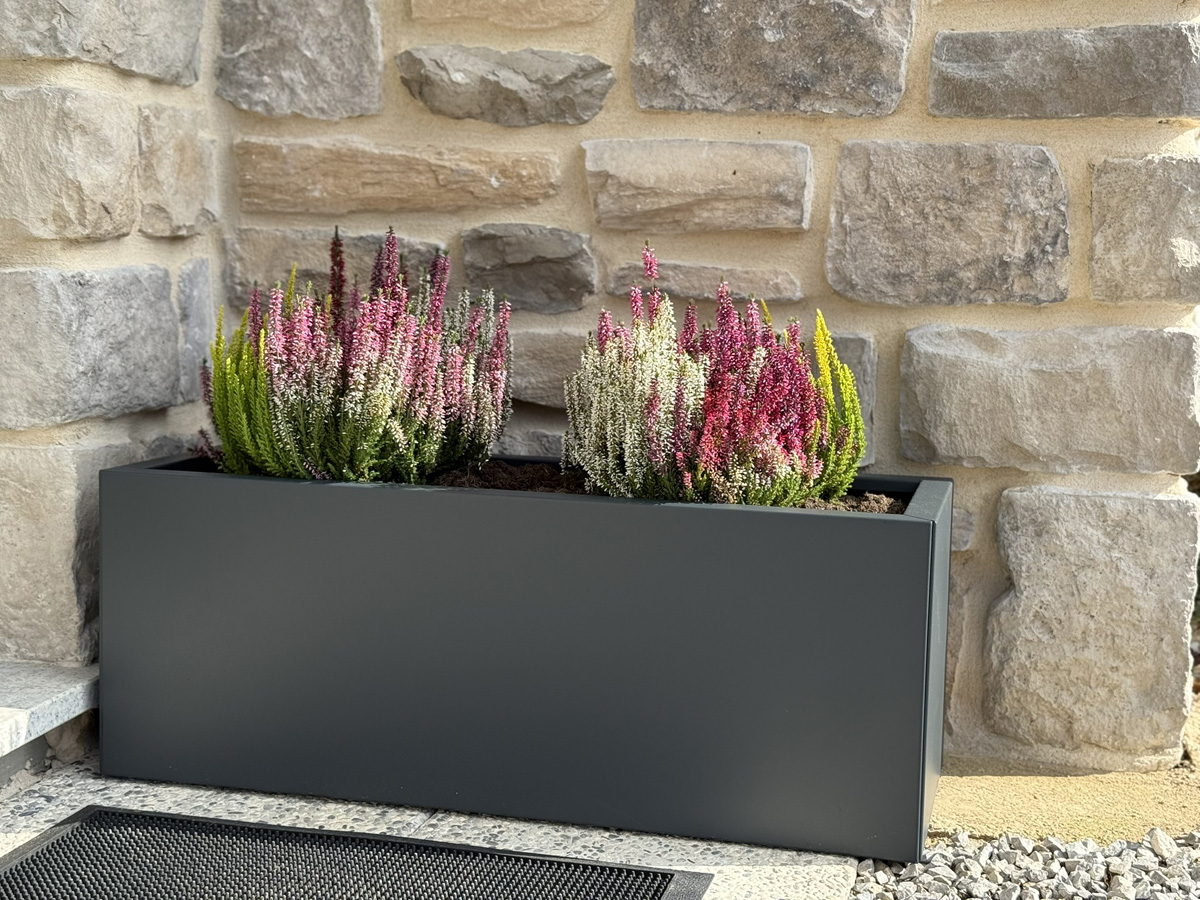
When planting flower boxes in autumn, proper planning is also key to ensuring that the composition is balanced and long-lasting. Start by choosing a color scheme: autumn tones such as red, orange, and green create warmth, while blue and white add freshness. For example, combining yellow chrysanthemums with purple heather and gray ornamental cabbage creates a harmonious autumn impression that matches the color of the planter. Arrange the plants by height: taller ones in the middle (asters or angelica), shorter ones at the edge (pansies or ivy) to make the planter look full and natural. Consider the sun exposure: sunny locations are suitable for chrysanthemums and heather, while shady locations are better for cyclamen and ivy.
In addition to chrysanthemums, autumn heather (Calluna vulgaris) is a real star for planters. It blooms from August to December in white, yellow, pink, purple, and green colors, giving the planter a carpet reminiscent of forest soil. Heather is an acid-loving plant, so plant it in a mixture with added peat or pine. It goes well with pansies, which are frost-resistant and bloom until spring. Pansies are available in colorful mixtures, from blue to yellow, and add vibrancy to the planter. For texture, include ornamental cabbage (Brassica oleracea), which retains its shape throughout the winter with large, wavy leaves in purple or white – ideal as a structural element in the middle of the container.
Don’t forget perennials such as asters, which bloom in September with blue or pink flowers and add height (up to 60 cm). For evergreen accents, use ivy (Hedera helix), which spreads and fills spaces, or skimmia (Skimmia japonica), which adorns the planter with red berries and shiny leaves until spring. For bulbs that will bloom in spring, plant daffodils or tulips at the bottom of the planter – planting them in autumn will protect them from frost. Cyclamen (Cyclamen hederifolium) with delicate pink flowers and angelica (Angelica sylvestris) for height variation are also popular in Slovenian gardens. The choice of plants should take into account the size of the planter: for smaller ones, use low varieties, for larger ones, combine taller and shorter plants.
For sustainability, include ornamental grasses such as Imperata Cylindrica with red tips, which add movement in the wind. For winter interest, add sprigs of evergreens such as sage or rosemary, which tolerate the cold and are fragrant to the touch. Combinations should follow the season: in October, when the flowers are still lush, the planting will retain its color until Christmas. Experiment with layering—e.g., bulbs below, annuals above—for a perennial planter.
Preparing flower boxes
Preparing flower boxes is the basis for successful autumn planting. Before planting, fill the box with a drainage layer of gravel or expanded clay (2–5 cm) to prevent water from standing. The soil should be light and nutritious: use universal potting soil mixed with compost for autumn fertiliser (rich in potassium for the roots). The pH should be neutral to slightly acidic (6–7), which suits most autumn plants. For sustainability, add organic fertilizers that improve soil structure without chemicals. If the planter is small, use coconut fiber for better moisture retention. At flamula.si, planters are available in sizes from 30 cm to 120 cm to suit your needs.
From seedlings to watering
First, soak the roots of the seedlings in water for 10–15 minutes to moisten them. Place drainage at the bottom of the planter, then add a layer of soil. Start with taller plants in the middle: e.g., chrysanthemums or asters. Plant shorter plants, such as pansies and heather, around the edges so that the edges of the planter remain visible. For texture, add ornamental cabbage or ivy to fill in the gaps. Press the soil down lightly to remove any air pockets and water generously to settle it.
Another option is to place tulips or daffodils at the bottom (5–10 cm deep), then cover with soil and plant surface plants. This will ensure a blooming spring. Wear gloves when working with heather, as it can irritate the skin. The entire process takes 5–60 minutes for one planter. After planting, cover the surface with bark to reduce moisture evaporation and suppress weeds.
Care tips are key to surviving the winter. Water regularly, but not excessively – in autumn, the soil dries out more slowly, so check the moisture with your finger (2 cm deep). During dry periods, water every 3–5 days. Fertilize with autumn fertilizer (low nitrogen, high potassium) every 4 weeks to support the roots. Protect from frost with agrotextile or move the pots to shelter during the first frosty nights. Remove dead parts regularly to prevent disease. In sunny locations, add bark mulch to retain moisture. Add seasonal accessories such as LED lights for evening illumination.
These combinations not only beautify the space, but also support biodiversity—heather and asters attract bees late in the season. Autumn planting in flower boxes is not only decorative, but also calming—an opportunity to relax and prepare for winter rest. By choosing the right plants and planters, your space will come alive in warm autumn tones. If you are looking for high-quality flower planters that will last for years, take a look at our offer.