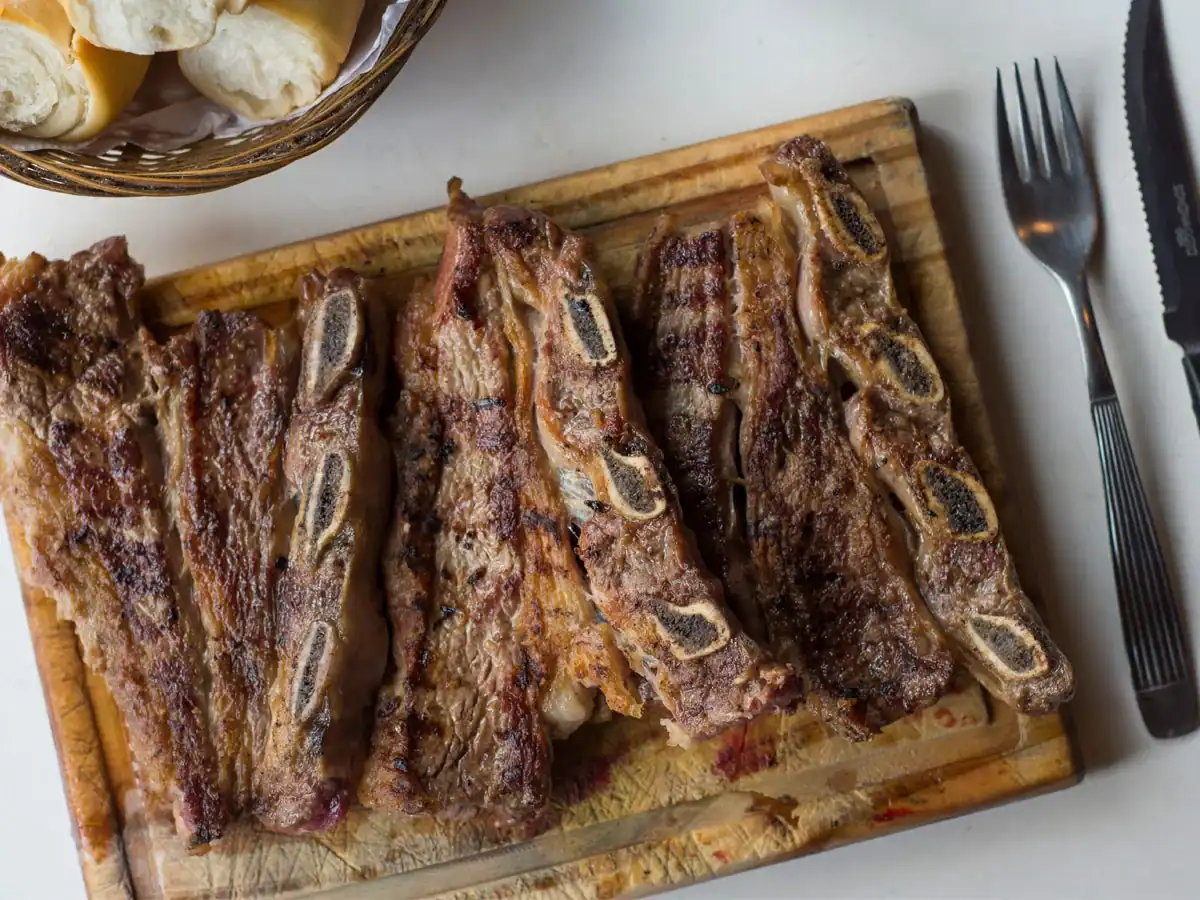
Argentine steak is one of those dishes that does not require complicated recipes. A good cut of beef, a properly heated grill and a little patience are often enough for an excellent result. The goal is quite simple: a nicely browned crust on the outside and juicy, tender meat on the inside. When preparing steak on the grill, most mistakes happen because of the wrong temperature, too short a resting time or cutting the meat too soon. If we follow a few basic rules, we can also prepare a steak at home that tastes very similar to one served in a good restaurant.
Choose a quality cut of meat
To start, we need a good cut of beef. When it comes to steak, it is worth choosing well-aged meat, as such a cut generally has a more pronounced flavor and a more pleasant texture. Good marbling is also desirable, with fine layers of fat distributed between the muscle fibers. A suitable steak thickness is approximately 2 to 4 centimeters. A thicker cut is a good choice for anyone who wants a nicely browned surface and a well-colored center. With very thick cuts, it is somewhat more difficult to achieve even cooking, so combining indirect and direct grilling is a sensible approach. If we use an already seasoned Argentine steak, an additional steak marinade is not necessary. With quality meat, the seasoning can remain very simple, as we want to preserve its natural flavor.
Let the steak warm up before grilling
Take the meat out of the refrigerator about 30 minutes before grilling. This allows it to warm up and makes it easier for the center to reach the desired temperature before the outside becomes too well browned. Before placing the steak on the grill, dry it thoroughly with a paper towel. A dry surface will brown much better and create an attractive crust. If there is a thicker layer of fat along the edge, it can be trimmed slightly. With a thicker fat edge, you can make shallow cuts every few centimeters. The fat contracts during grilling and, without these cuts, can cause the meat to curl.
The grill must be really hot
A lukewarm grill is not a good choice for steak. The grill grate must be well heated because we want to sear the meat quickly and create a pronounced crust on the surface. When preparing an Argentine steak, the grill temperature can reach approximately 250 to 300 °C. With a very hot grill, the cooking time should be relatively short, although the exact time mainly depends on the thickness of the meat and the desired level of doneness. Before grilling, clean the grate and lightly oil it if necessary. With a thicker steak, it is useful to prepare two temperature zones. One part of the grill should be very hot, while the other should be slightly cooler. This allows us to move the meat during grilling and control the final result more easily.
Direct or indirect grilling?
Thinner steaks are usually grilled directly over the heat source. With thicker cuts, a combination of both methods is useful. With indirect grilling, place the steak on the cooler part of the grill first. There it heats up slowly without the outer layer becoming browned too quickly. When it reaches approximately 45 to 48 °C in the center, move it to the hottest part of the grate. Grill it over direct heat for another two to three minutes on each side, or until it reaches the desired internal temperature. This gives us a nicely browned surface while the center remains juicy.
Thinner steaks are usually grilled directly over the heat source. With thicker cuts, a combination of both methods is useful. With indirect grilling, place the steak on the cooler part of the grill first. There it heats up slowly without the outer layer becoming browned too quickly. When it reaches approximately 45 to 48 °C in the center, move it to the hottest part of the grate. Grill it over direct heat for another two to three minutes on each side, or until it reaches the desired internal temperature. This gives us a nicely browned surface while the center remains juicy.
The cooking time is not the same for every cut. A lot depends on its thickness. For a steak approximately three centimeters thick, we can allow about three minutes per side for medium doneness, but a thermometer is much more reliable than measuring the time. With a very hot grill, a thicker steak can first be grilled for a few minutes on the cooler part and then moved directly over the heat source. With thinner meat, the entire cooking process can take place over direct heat. Do not pierce the meat with a fork during grilling and do not cut it with a knife to check the center. This can cause some of the juices to escape. Use a kitchen thermometer to check the temperature instead.
Choose the desired level of doneness
Everyone has their own preferences. Some prefer a very red center, while others want the meat more well done. For rare, the temperature in the thickest part should be approximately 52 °C. For medium rare, the recommended temperature is approximately 54 °C. For medium, we can aim for around 58 °C, while for well done, the temperature is around 68 °C. Check the temperature shortly before the end of grilling. Insert the thermometer into the thickest part of the meat, as this will give you the most useful reading.
The crust makes a big difference
With a good steak, it is not only the center that matters. The outer layer is also very important and should be nicely browned and caramelized. To create distinctive grill marks, place the meat on a very hot surface and leave it there for a while without moving it. If you want the characteristic crosshatch pattern, you can rotate it during grilling. There is no need to turn it excessively often. With a thicker steak, after the initial grilling over direct heat, you can move the meat to the cooler part and finish cooking it there. This makes it easier to reach the desired temperature without over-browning the outside.
The steak needs to rest after grilling
When the meat is cooked, do not cut it immediately. Place it on a cutting board or plate and let it rest for approximately five minutes. With thicker cuts, the resting time can be slightly longer. During the resting period, the juices redistribute evenly throughout the meat. If you cut the steak immediately after taking it off the grill, a considerable amount of juice may end up on the cutting board instead of remaining in the meat. After resting, you can cut it into slices. If desired, add a little more salt and freshly ground black pepper.
Argentine steak can be served very simply, but chimichurri sauce is an excellent accompaniment. It is a fresh sauce made mainly from parsley, garlic, onion, lemon juice, vinegar and olive oil. You can also add a little chili. The freshness of the sauce pairs beautifully with the strong flavor of grilled meat. The steak can also be served with grilled vegetables, potatoes, tortillas or fresh salsa.
Argentine steak on an electric grill
Preparing a good steak does not necessarily require a large amount of charcoal. An electric grill also heats up quickly and allows you to control the temperature well. This is especially convenient at home, on a balcony or terrace, where we want to prepare a quality meal without spending a long time preparing the fire. Flamula electric grills can be used to prepare different types of meat, vegetables and other grilled dishes. Place the steak on the well-heated surface, monitor the temperature of the meat and let it rest for a few minutes after grilling. This will make it easier to achieve a juicy center and a nicely browned exterior. If you enjoy real grilled dishes, Argentine steak is an excellent choice for your next get-together, a weekend lunch or a simple evening at home. A quality cut of meat, high heat and a little attention during grilling are enough to create a dish you will be happy to prepare again and again.