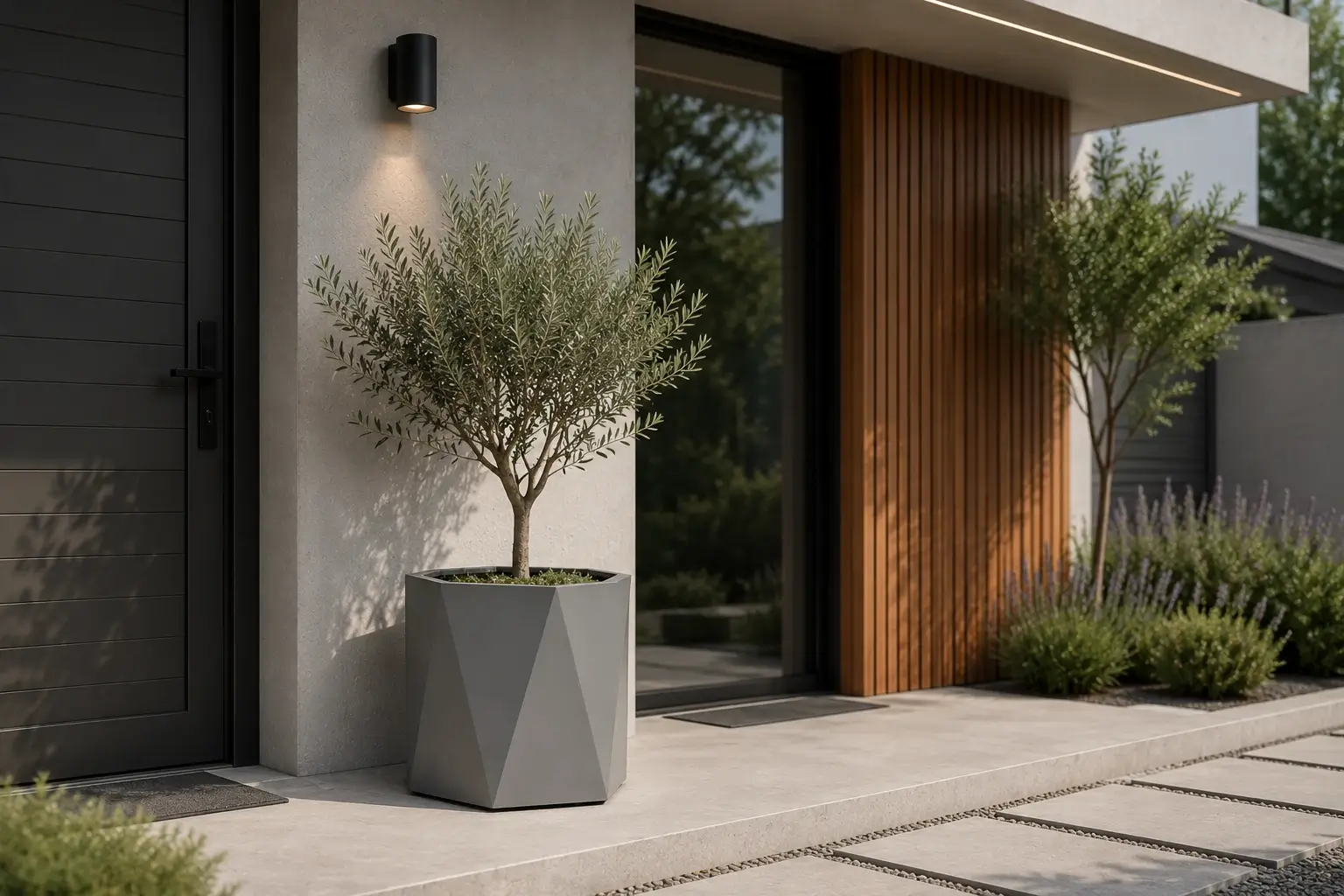
Winter on a balcony, terrace or in front of your home does not necessarily mean having to put up with empty, dull flower planters. By choosing plants that can withstand cold, wind and temperature fluctuations, you can keep your outdoor space green, lively and attractive even when most other plants are dormant. The key is to select species that thrive outdoors in planters, tolerate low temperatures and limited root space, and do not require daily care.
Why Choose Low-Maintenance Winter Plants for Planters?
Plants growing in planters are more exposed to the cold than those planted directly in the ground. Their root balls freeze more quickly because a smaller amount of soil provides less insulation. That is why evergreen shrubs, dwarf conifers, heathers and certain hardy perennials are particularly good choices. Many can withstand temperatures of -15°C or lower. They retain their leaves or needles throughout the year, and some even flower in winter. Their main advantage is that they require very little maintenance. Water them moderately when the soil dries out and there is no frost, remove dry plant parts occasionally, and protect them from extreme cold with mulch or by moving the planters closer to the house wall. Fertilising is unnecessary in winter because the plants are dormant.
Choosing the right planter is equally important. Terracotta and ceramic containers are best avoided in winter because they can crack when the water inside freezes. Metal, plastic and concrete planters with good drainage are more suitable. Metal flower planters are particularly practical because they are lightweight, stable and weather-resistant.
The Best Winter Plants for Outdoor Planters
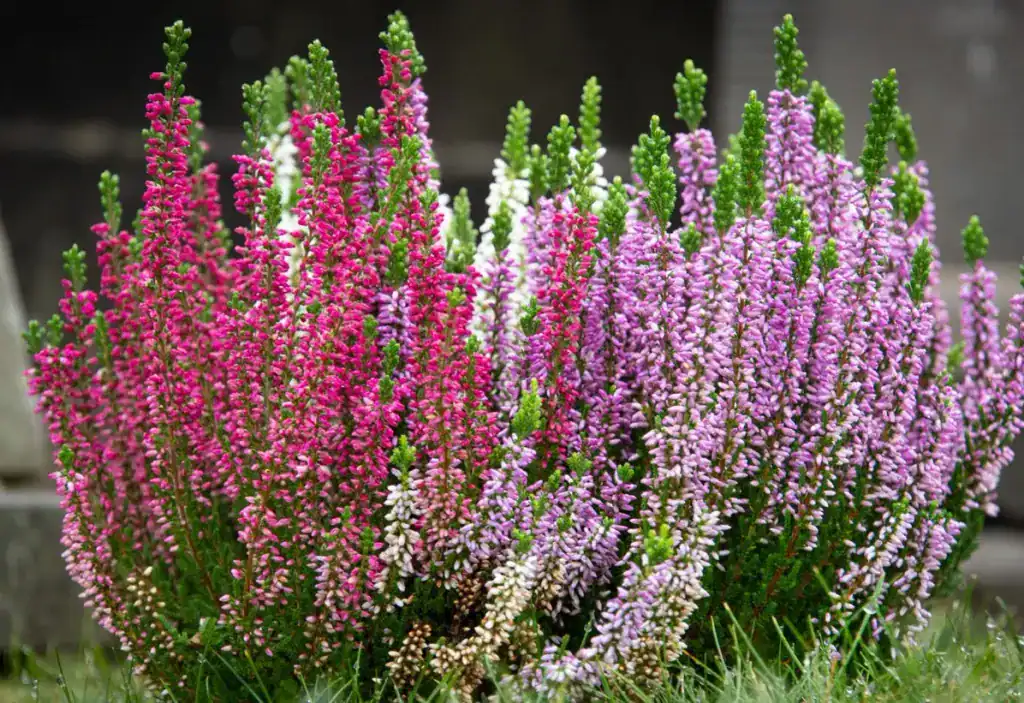
Winter heath (Erica carnea) is a classic choice for winter arrangements. It flowers from late autumn until spring, producing pink, white or purple blooms when most other plants are dormant. It grows low and compact and can withstand temperatures down to -25°C. Winter heath thrives in acidic, well-drained soil and needs little water. In winter, watering is rarely necessary except during prolonged dry spells. Combine it with dwarf conifers or boxwood to create an attractive contrast.
Boxwood (Buxus sempervirens) stays green throughout the year and can be trimmed into spheres, cones or low hedges. It is extremely hardy and well suited to planters, where it can remain in the same position for several years. Pruning is minimal and is usually only needed in spring to maintain its shape. Watch out for box tree moths, but otherwise, this plant requires little attention. It tolerates both cold weather and shade well.
Ivy (Hedera helix) is a classic, low-maintenance choice. Its evergreen leaves, which are variegated in some varieties, cascade over the edges of planters or climb up a support. Ivy is highly tolerant of cold and shade, grows quickly and needs very little care. Plant it along the edge of the planter to create an attractive green cascade.
Dwarf conifers, including certain varieties of false cypress (Chamaecyparis), juniper (Juniperus) and mountain pine (Pinus mugo), add structure and evergreen colour to winter arrangements. They grow in compact, conical or spreading forms, can remain in the same planter for years and tolerate even harsh winters. They need moderate watering and generally require very little fertiliser.
Skimmia (Skimmia) retains its leaves during winter and develops red buds or decorative berries. It can withstand temperatures down to -15°C and pairs well with winter heath. Hellebore (Helleborus) flowers in winter, producing white or pink blooms, and is an exceptionally long-lived perennial. Mahonia stands out for its glossy leaves and yellow spring flowers and is also hardy.
Other suitable choices include holly (Ilex), yew and certain ornamental grasses that retain their structure even under snow. All these plants require little maintenance. Check the soil moisture once a week, water less frequently during winter, remove any damaged plant parts and add a layer of mulch made from bark, fallen leaves or spruce branches to protect the roots.
Tips for Successful Winter Planting in Planters
Use high-quality potting soil with good drainage. Before severe frosts arrive, move the planters closer to a wall or under a canopy. If necessary, wrap them in jute or bubble wrap for additional insulation. Water only on frost-free days when the soil is dry. In spring, fertilise the plants and repot them if needed. Plant combinations can be simple: winter heath, boxwood and ivy create a harmonious arrangement, while a dwarf conifer combined with skimmia and hellebore adds variety in shape and colour. This allows you to create an attractive display without spending much time on maintenance.
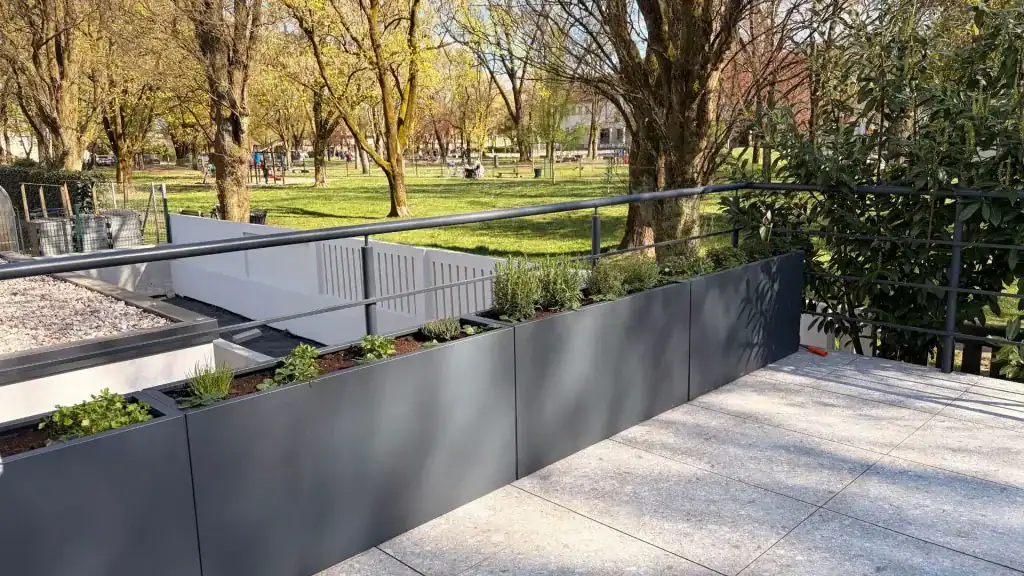
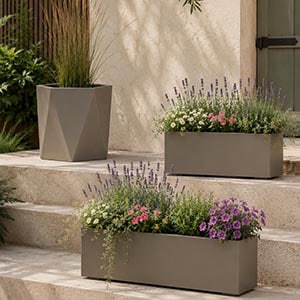
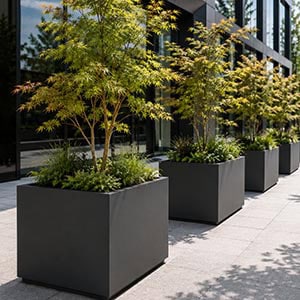
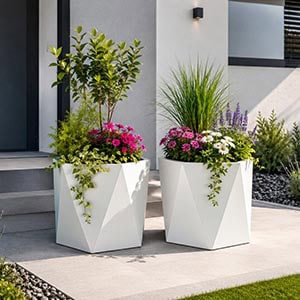
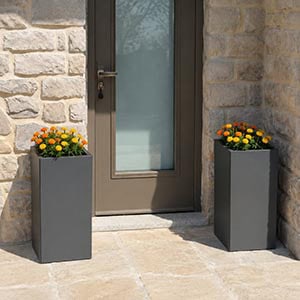
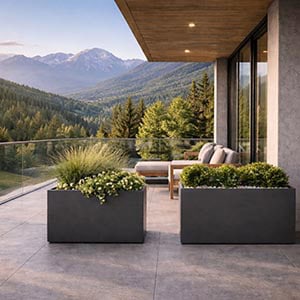
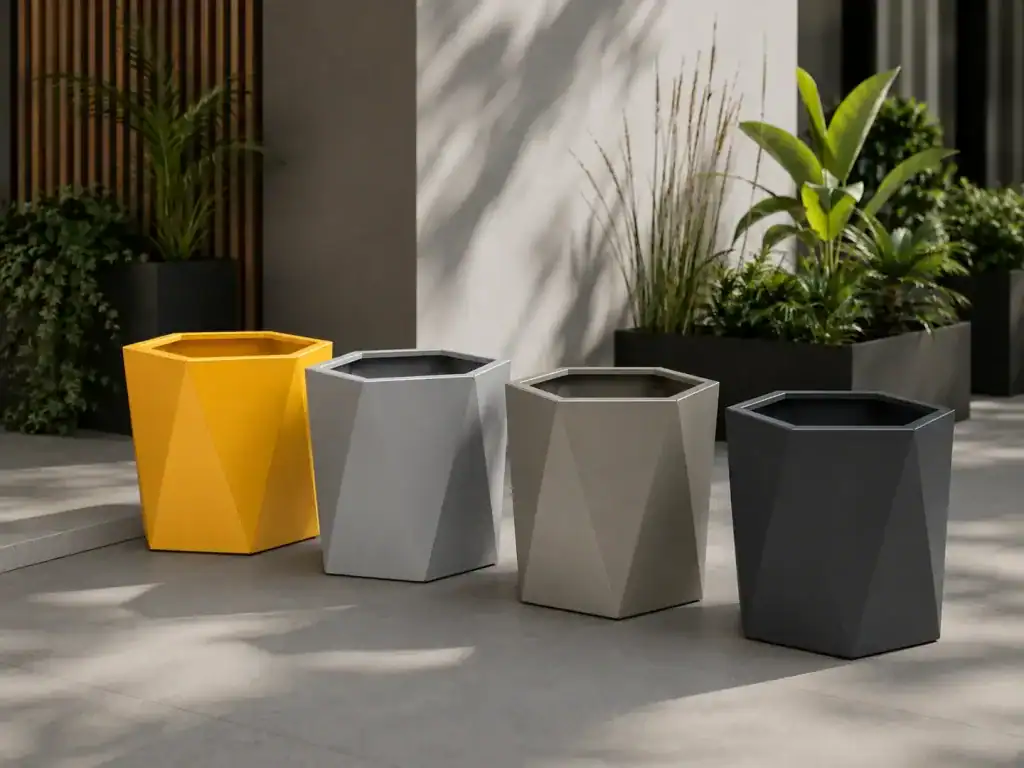
Flamula Metal Flower Planters for Winter Arrangements
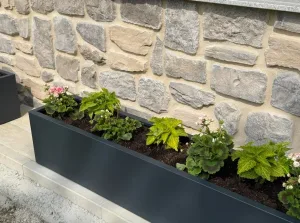
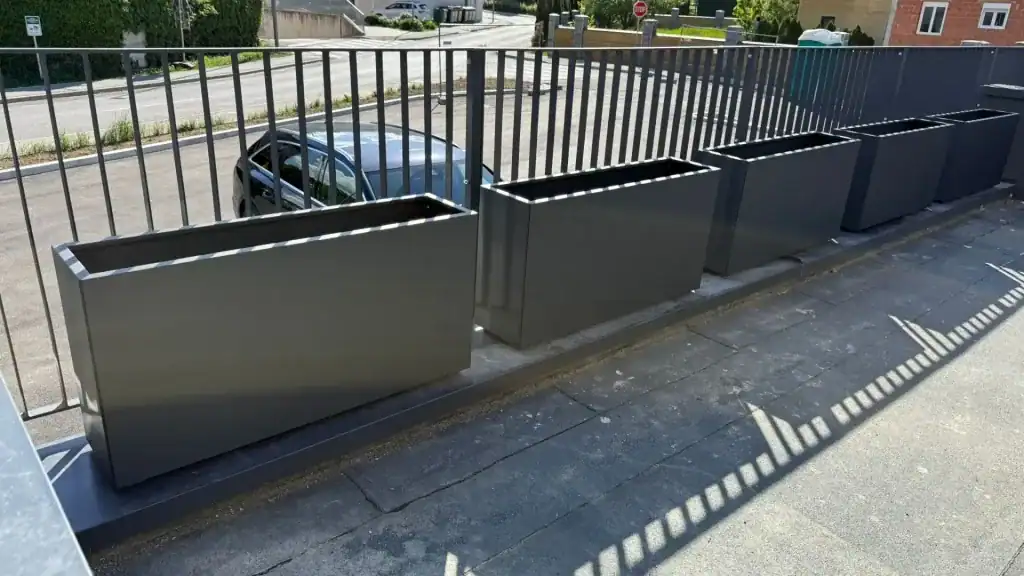
Durable planters are essential for winter plants that remain outdoors. Flamula offers premium-quality metal flower planters manufactured in Slovenia from high-quality galvanised sheet metal. They are resistant to rust, UV rays, rain, snow and temperature fluctuations, making them suitable for every season, including cold winters. Their powder-coated finishes are available in colours such as anthracite (RAL 7016 FS) and aluminium grey (RAL 9007 FS). They retain their elegant, modern appearance without peeling or fading. The range includes numerous sizes, from smaller balcony planters, such as 30 × 30 × 30 cm, to large models for terraces and entrances, including 30 × 120 × 30 cm and 80 × 80 × 60 cm. Custom-made options are also available.
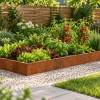
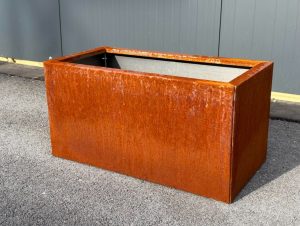
The Corten steel flower planters deserve special mention. They are made from Corten steel, which develops a natural reddish-brown patina over time. This gives the planters a distinctive, contemporary appearance while creating a protective layer that prevents further corrosion. Corten planters are highly weather-resistant, require no painting or special maintenance, and are ideal for year-round outdoor use. They are available in different sizes, including 30 × 30 × 60 cm, 60 × 60 × 30 cm and 30 × 60 × 120 cm. The different dimensions make them suitable for everything from winter heath to small shrubs and dwarf conifers.
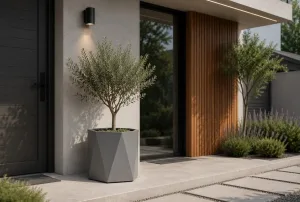
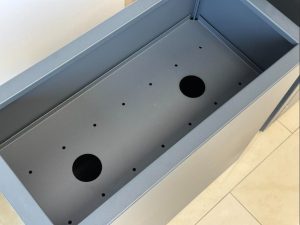
Flamula planters feature a perforated base that allows excess water to drain away while providing stability. They are suitable for terraces, balconies, entrances and gardens. Because they are made of metal, they do not crack in freezing temperatures like terracotta and do not fade as easily as plastic. They can also be used to create green privacy screens or striking architectural features in outdoor spaces.
Explore the full range at https://flamula.eu/planters/, where you will find a wide selection of models, including Corten steel options. With hardy plants and high-quality Flamula planters, your outdoor space can remain attractive throughout winter. Cold weather does not have to stand in the way of a green environment. Winter heath, boxwood, ivy, dwarf conifers and other low-maintenance species planted in durable metal or Corten steel planters can help you enjoy a tidy, lively outdoor setting all year round. Choose hardy plants, provide basic protection against severe cold and let nature do the rest.